 Dossiers · Without Anyone Pressing Send
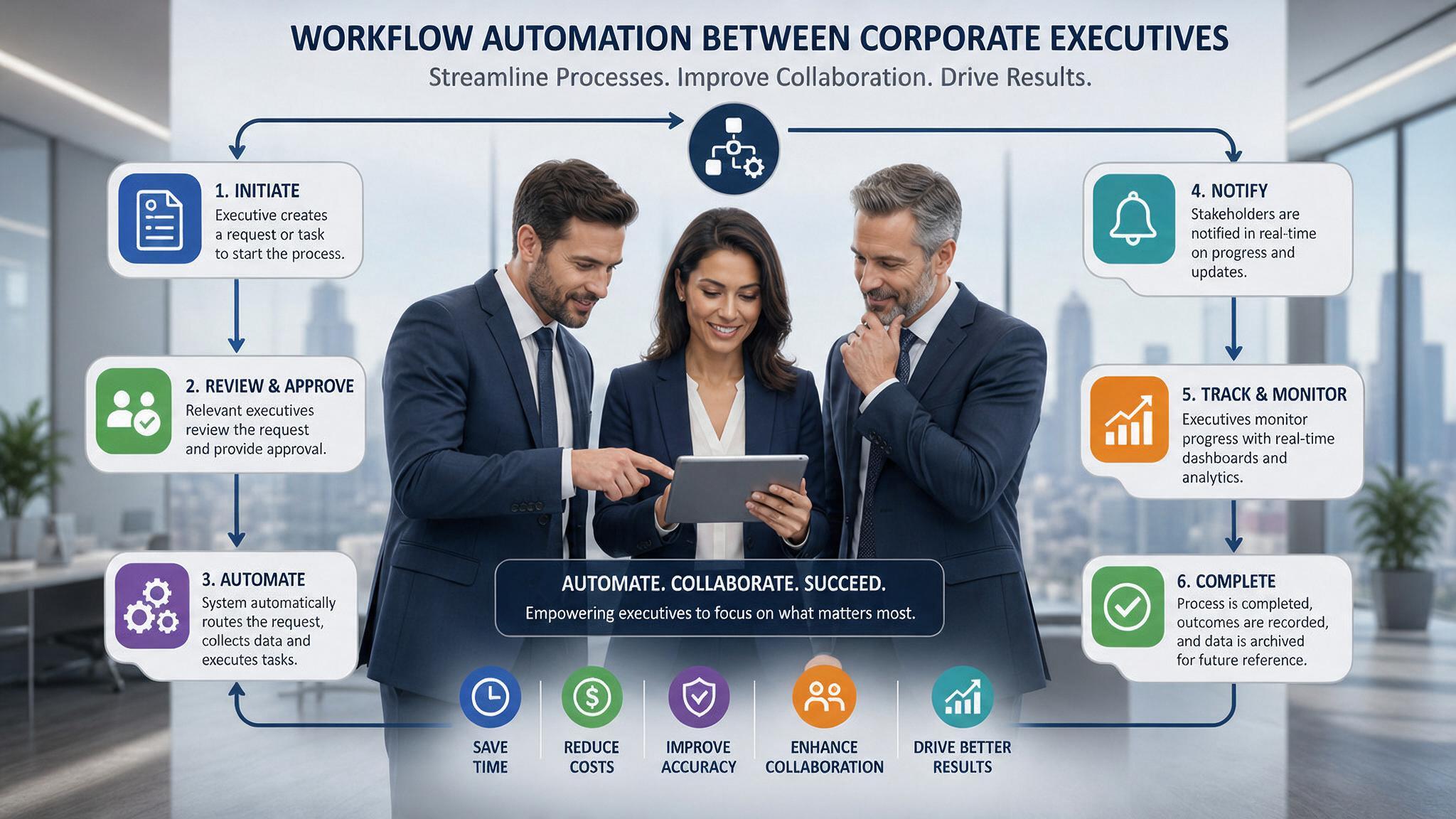
How the best-run businesses get the routine done — the follow-ups, the alerts, the handoffs — without it depending on someone remembering.
Without Anyone Pressing Send
Most of what keeps a business running is quiet, repetitive, and done by hand — and it only happens if someone remembers to do it. That is a fragile way to run anything.
The Business That Runs on Remembering
The work that isn't on anyone's job description — and holds the day together.
The tasks that live in people's heads
Every business has a second business hidden inside it. Not the work customers pay for — the work that carries that work from one step to the next. Someone remembers to follow up on the quotation. Someone notices the stock is running low. Someone tells the customer their order shipped. Someone chases the approval that's been sitting for two days. Someone keys the same figure into the accounting system that was already entered on the floor. None of it appears on an org chart, none of it is anyone's actual job, and all of it depends on a person remembering to do a small thing at the right moment. On a good day, they remember. The business runs on the days they don't as much as the days they do.
The most fragile system in most businesses is a person remembering to do something.
The Quiet Tax of Doing It by Hand
Five places the relay work quietly costs — time, money, and the customer who went elsewhere.
The re-entry tax
The same fact gets written down more than once. An order taken on the floor is typed again into the accounts. A customer's details entered in one system are entered afresh in the next. A number read off a report is copied into a message. Each re-entry takes a minute and invites an error, and the errors are the expensive part — a transposed figure, a missed decimal, a name spelled two different ways so the same customer becomes two. The cost is not the typing. It is the quiet divergence between systems that were supposed to agree, discovered later, reconciled by hand.
The chase
In most businesses there is at least one person whose day is largely spent asking whether things have happened yet. Has the vendor confirmed? Did the payment come in? Has the approval moved? Did anyone respond to that enquiry? Chasing status is real work, it fills real hours, and it produces nothing except the knowledge of where things stand — knowledge that is out of date again by the afternoon. It is the clearest sign that the work is moving through people rather than through a process that can report on itself.
A day spent asking "has this happened yet?"

A day spent asking "has this happened yet?"
The alert that came too late
Something crossed a line that mattered — stock fell below the point of no return, a service promise breached its deadline, a payment slipped past due, a batch went out of spec. The information existed. What was missing was someone looking at exactly that number at exactly that moment. So the threshold was crossed quietly, and by the time a person noticed, the cheap early response was no longer available and only the expensive late one remained. Most costly surprises in a business were not unknowable. They were simply unwatched.
The hours nobody is at the desk
Enquiries, orders, and complaints do not keep office hours. They arrive at night, on Sunday, during the festival week when half the team is away — and then they wait, untouched, until someone is back at the desk. The customer who sent an enquiry at nine in the evening has often heard from someone else by nine the next morning. Nothing was neglected out of carelessness; the business was simply closed, and the work that could have been done the moment it arrived instead aged overnight into a colder lead and a slower answer.
The dropped baton
The most avoidable failures happen at the handoff, where one person's part ends and another's begins, and the only thing connecting them is a message, a memory, or a promise to "let them know." When that relay depends on a human, it fails in human ways: the person is on leave, the message is buried in a chat, the note is written but never seen. The step didn't happen because the trigger for it was somebody remembering — and that day, understandably, they didn't.
It All Depends on Someone Remembering
Reliable people, held back by a fragile method.
Reliable people, fragile method
None of this is a failing of the people. They are usually diligent, and they hold an astonishing amount of the business together by sheer attention. The fragility is in the method: routine, rule-bound relay work — the kind with a clear trigger and a clear next action — is being carried by human memory and availability, squeezed into the gaps between the work people are actually paid to do. That method is slow, it is inconsistent, it does not scale, and it breaks precisely when the business is busiest and the reminders are needed most. The work that follows a rule does not need judgement. It needs only to happen, every time, on time.
If a task always follows the same rule — when this happens, do that, and tell these people — then a person is the most expensive and least reliable way to make sure it gets done.
When the Routine Runs Itself
People for judgement. The system for everything that follows a rule.
People for judgement, the system for the relay
Picture the same business with the routine lifted off its people. The event itself sets the next step in motion: the order arrives and the confirmation goes out, the plan updates, the shortfall raises its own purchase request. The threshold announces itself the instant it is crossed, to exactly the person who can act, on the channel they actually read. The enquiry that lands at midnight is acknowledged at midnight. The handoff happens because the previous step finished, not because someone remembered to pass it on. The people are still central — but their attention is spent on the judgement calls only a person can make, while the predictable relay work runs underneath them, quietly, every time, without waiting to be told.
The goal is not fewer people. It is people freed from the work that never needed a person in the first place.
Automation, Built Around Your Actual Workflow
The instrument for everything so far — and it works with what you already run.
When this happens, do that — reliably, and around the clock
This is the work we take off your people. Fervour builds workflow automation on a robust, industry-standard engine, configured around the exact rules your business already follows — your approval hierarchies, your thresholds, your communication rules — so that when a defined event occurs, the right sequence of actions simply runs. No one presses send. And because the automation is shaped to your process rather than a generic template, it does the things your business actually does, in the order you actually do them.

A layer that connects, not a system that replaces.
It works with what you already run
Automation does not require you to replace your systems. It sits across the tools you already use — your existing software, your spreadsheets, your messaging — and connects them, moving information between them and acting on it, so the seams stop leaking time. If a larger system is right for you later, the automation carries over. If it is not, the automation still earns its place on day one. This is the least disruptive improvement most businesses can make: nothing is torn out, and the manual relay quietly disappears.
A layer that connects, not a system that replaces.
On the channel India actually reads
Much of the value shows up on WhatsApp, because that is where Indian businesses and their customers already are. The critical alert reaches the owner there within the minute. The customer receives the confirmation, the dispatch date, the certificate link there, without anyone typing it. Staff are notified there the moment something needs them. Reaching people where they already look is often the difference between an alert that changes the outcome and one that is read too late to matter.
Judgement, where judgement helps
Where a step genuinely needs a decision, intelligence is built into the flow rather than bolted alongside it. An incoming request can be read and classified so the urgent one is escalated and the routine one is routed. A draft reply can be prepared for a person to approve rather than compose. An anomaly — a number that does not look right — can be caught and flagged before it travels. The automation handles the rule; the AI handles the judgement the rule cannot capture; the person handles what neither should.
Already doing this, quietly
These are not hypotheticals. In live Fervour deployments today, a critical service ticket classifies itself, alerts the owner within a minute, assigns the right technician, and starts an SLA clock — while the customer is told their request has been prioritised. A franchise order updates the day's production plan, checks the requirement against stock, and raises a purchase request on its own when material is short. A production batch that fails inspection quarantines itself and logs the fault against the raw-material lot for traceability. A learner who passes an assessment is issued a verified certificate, sent the link, and scheduled for renewal — no one touches any of it. Each of these was built around one business's particular rules, which is the only way automation is worth having. And we hold ourselves to the same standard: we run our own company on automations we built, because we won't ask you to trust work we wouldn't rely on ourselves.
Process before Technology
Where we start, and how this begins.
We automate the process you already have
Automation goes wrong when it is bought as a product and imposed on a business that then bends to fit it. We start the other way round: with the rules you already follow and the handoffs that already exist, and we make the routine ones run on their own. The aim is not to change how your business works — it is to stop the parts that follow a rule from depending on someone remembering. If any of the tasks in this dossier sound like yours — the chasing, the re-entry, the alert that came too late, the message that never got sent — that is exactly where we would begin. And we will be candid: if a handful of automations is all you need, we will say so, and build only those.
Process before Technology.
Fervour Technologies Private Limited
Tell us the one task that most often falls through the cracks — we will show you how it runs without anyone pressing send.