 Dossiers · The Business Lives in the Handoffs
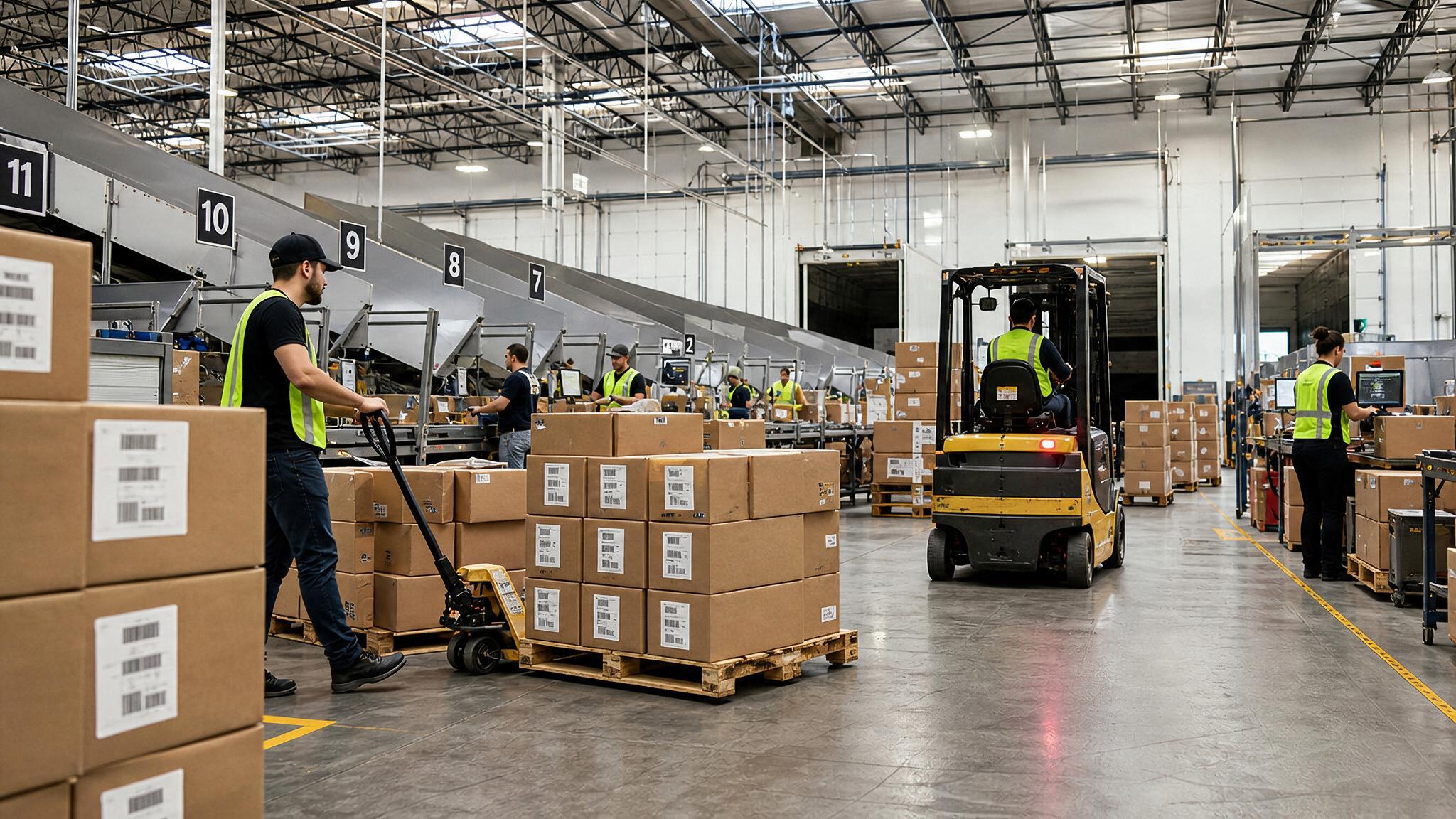
Why the best-run operations are judged not by their departments, but by what happens between them.
The Business Lives in the Handoffs
A business is not run inside its departments. It is run in the handoffs between them — and that is where the truth, and the margin, quietly go missing.
The Business Lives in the Handoffs
Every business is a chain of small transfers — the strong ones lose nothing in between.
Nobody runs a department in isolation
Picture an ordinary week. An enquiry arrives and becomes a quotation. The quotation is revised, then accepted, and becomes an order. The order reaches for material that may or may not be on the shelf. Material feeds production, production becomes something that can be dispatched, dispatch becomes an invoice, and the invoice — eventually — becomes a line in the ledger. Every business, in every industry, is some version of this chain. What separates the well-run from the merely busy is almost never the quality of any single step. It is how cleanly the work moves between them. The strongest operations lose nothing in the handoff. The rest lose a little at every joint, and spend the month wondering where it went.
Work is done inside departments. Money is made — or lost — in the spaces between them.
Where the Truth Goes Missing
Five ordinary places a margin leaks — and no one ever decided to lose it.
Materials, moving
Material is the most honest thing in a business and the hardest to keep an eye on. It arrives, it is received, it is issued, it is consumed, some of it is returned, and some of it is scrapped — and every one of those events is a moment where the book and the shelf can quietly disagree. The stock report says one figure; the rack says another; the difference is real money that no single person decided to lose. The deeper cost is not the variance itself but the decisions made on top of it: an order accepted against stock that was already committed, a purchase raised for material sitting unseen in a corner, a shortage discovered only when the line stops. A business that cannot trust its own stock position is planning on fiction, however good its intentions.
Planning against numbers that have already moved
Production planning is only as good as the picture it plans against, and that picture ages by the hour. Demand is promised before capacity is confirmed. A schedule is drawn against material that is expected but not yet in, or against a machine already spoken for. The shortfall that should have surfaced at planning surfaces instead on the floor, on the day, when the options are fewest and the cost is highest. Good planning is not a cleverer schedule. It is a truer one — capacity, demand, and availability seen together, early enough that a problem is still a decision rather than an emergency.
The shortfall you find on the floor was knowable at the desk.
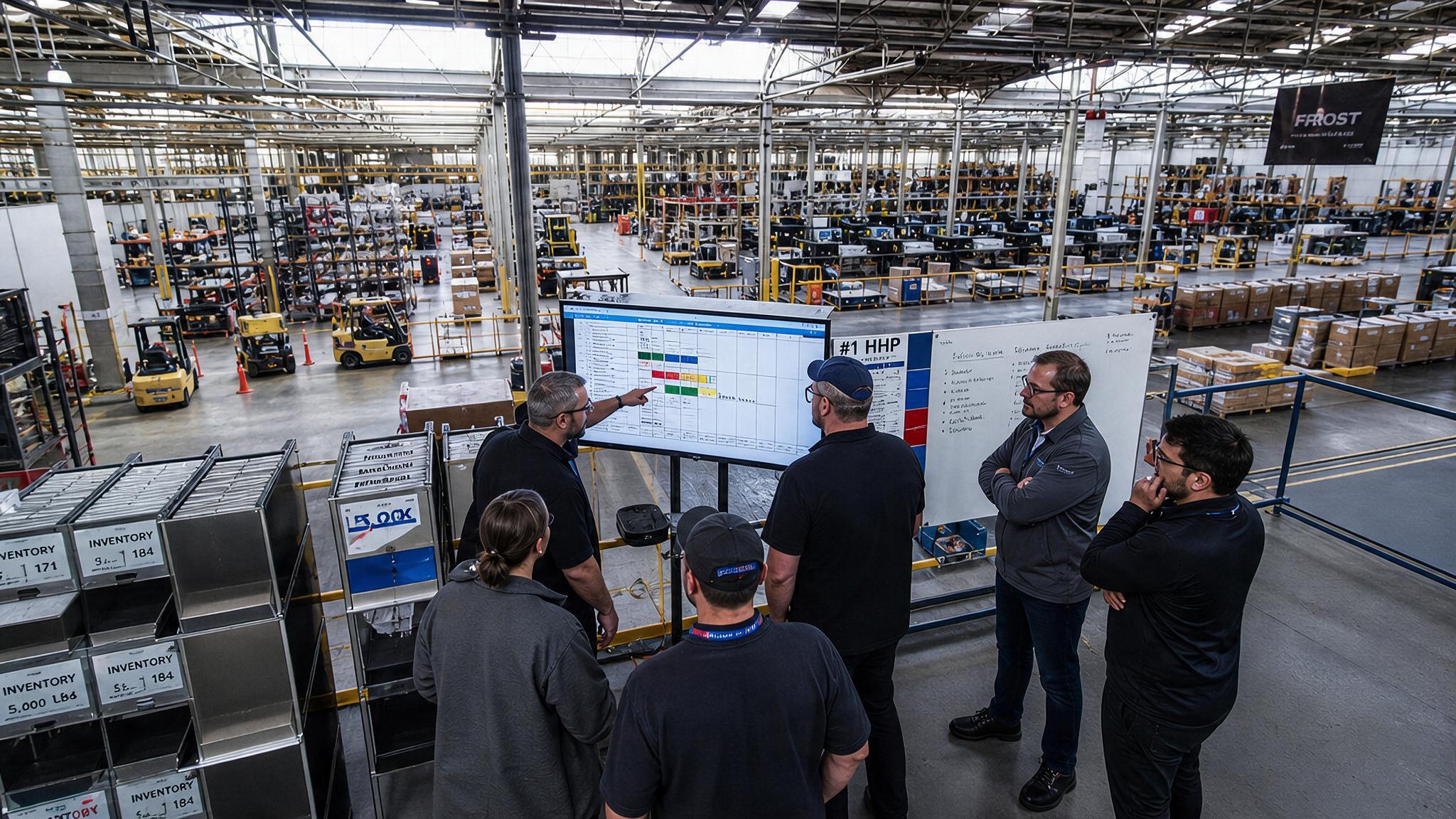
The shortfall you find on the floor was knowable at the desk.
The long road from order to cash
Between the order and the money sits the most under-watched journey in the business. A quotation goes through revisions that no one can later reconstruct. An order is confirmed but its terms drift from what was quoted. Goods are dispatched but the invoice trails behind, or the invoice goes out but never quite ties back to what left the gate. Then collection — the last handoff of all — depends on paperwork agreeing with reality across three departments that each recorded it differently. Revenue is earned on the floor. Whether it is recognised, invoiced, and collected in full is decided in the gaps behind it.
What a rejection actually costs
A rejected batch is rarely counted at its true price. The obvious loss is the material. The quieter losses are the labour and machine time already spent on it, and the order that now ships late because the rework pushed everything behind it. One number on a scrap report can hide three separate costs, and because they land in three different places — stores, production, dispatch — no one sees the full figure in one view. Businesses that understand this do not chase zero rejection; they chase visible rejection, because a cost you can see is a cost you can manage.
The cost you think you know
Ask most operations what a particular job or product actually costs to make, and the honest answer is an average — a figure smoothed across good months and bad, across the efficient run and the troubled one. Averages are comfortable and they are how margin erodes unnoticed. The real cost of a thing is the material it truly consumed, the time it truly took, the rejections it truly caused, and the overhead it truly carried — and it varies, job to job, in ways the average politely conceals. A business that knows its true cost can price with confidence and walk away without regret. A business working on averages is quietly subsidising its worst work with its best.
The Gap Between Doing and Knowing
It was never a want of effort, and never a want of knowledge.

It was never effort, and it was never knowledge
None of this comes from a business not trying hard enough, and none of it comes from not knowing its own trade. The people on the floor usually know exactly what happened. The problem is that what they know and what the system records are two different things, kept in two different places, reconciled days or weeks later — if at all. Operations runs on memory, messages, and spreadsheets that are current in one person's hands. Accounts runs on documents that arrive after the fact. Between them lies a gap, and the whole business spends real energy every month rebuilding a single version of the truth that should have existed all along.
The distance between what your operation knows and what your system can show — that gap is where margin, time, and confidence are lost.
What a Well-Run Operation Feels Like
Not busier than the rest. Quieter.
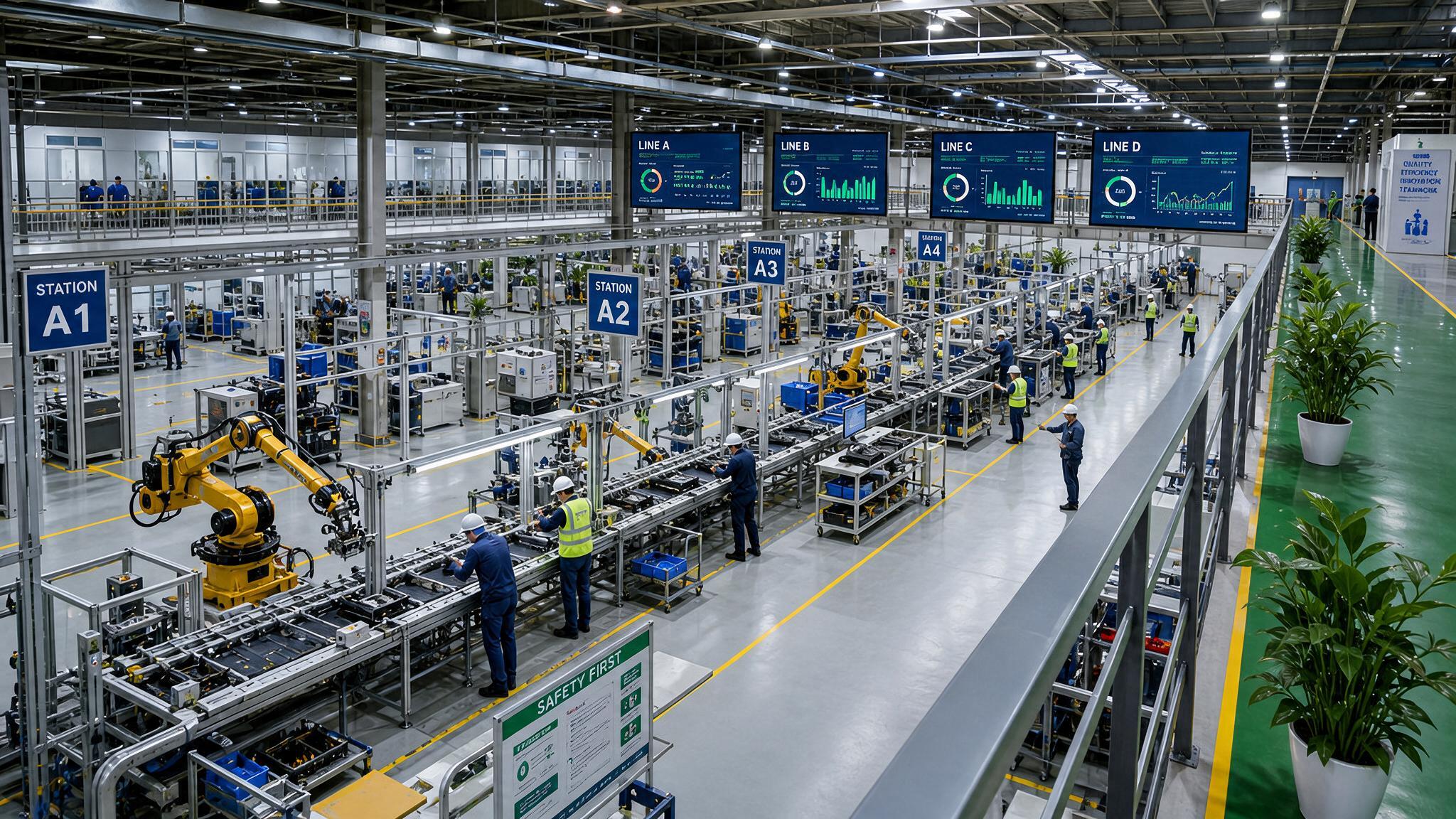
One version of the truth, while it still matters
A well-run operation does not feel busier than a poorly-run one. It feels quieter. There is one place where the numbers agree, and they are current — not a reconciliation of last week, but the position as it stands now. Stock reflects what is on the shelf. A plan is drawn against capacity and material that actually exist. The ledger is not a monthly reconstruction of the business; it is a by-product of the work, forming as the work happens. Exceptions announce themselves — the order at risk, the material about to run short, the invoice that hasn't tied out — instead of hiding until they become the crisis. And the operation keeps running cleanly when a key person is on leave, because the knowledge lives in the system and not only in their head.
The goal is not more software. It is a business where the doing and the knowing are finally the same thing.
An Operations System Built Around Your Handoffs
The instrument for everything described so far.

Not resource planning. Operations management.
This is why we build what we call an Enterprise Operations Management System rather than a conventional ERP. The distinction is not cosmetic. A traditional ERP is a pre-decided structure that a business adopts and adapts itself to; an EOMS is assembled the other way round — around the handoffs, exceptions, and language of your operation as it actually runs. It does everything you would expect an ERP to do. It simply refuses to make your business the thing that has to bend. That is what we mean by our one standing principle: Process before Technology.
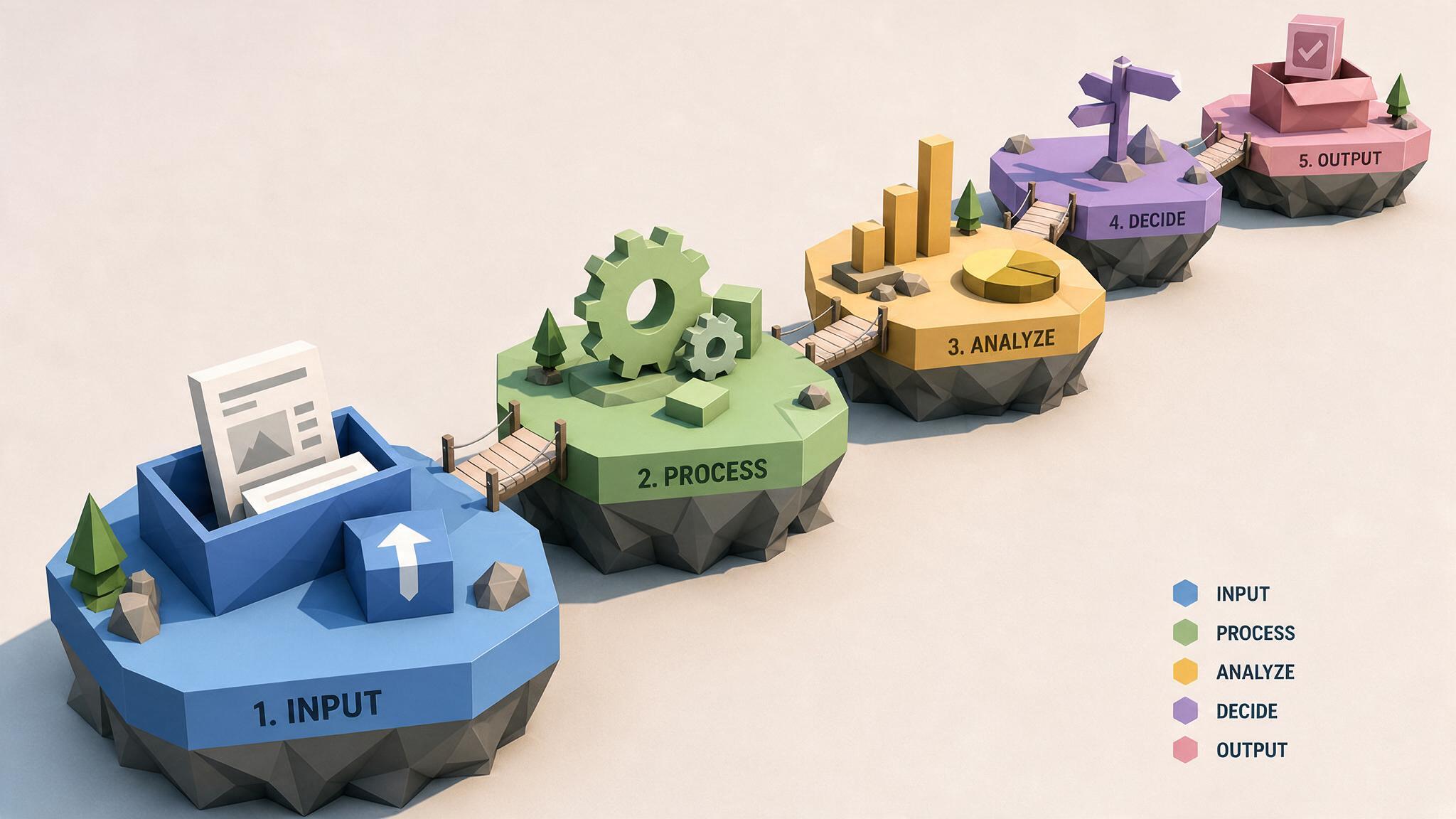
Your process, made into a system — not the reverse.
Built around you, switched on as you grow
Because the system is modelled on your operation, it speaks your language and follows your sequence from the first day. And because it is modular, you begin with the handoffs that hurt most and turn on the rest — materials, production, planning, sales, service, quality, costing, finance — as you are ready, on your timeline, never wrestling with parts you won't use for a year.
Your process, made into a system — not the reverse.
The connective work, done for you
The gaps between steps are exactly where repetitive manual effort accumulates: the same figure re-entered in three places, the approval chased across a chat thread, the notification that depends on someone remembering. We automate that connective work directly, so the handoffs happen on their own and the system doesn't merely record your operation — it runs parts of it. Where intelligence genuinely helps — surfacing what needs attention, drafting the routine, catching the number that doesn't look right — it is built into the fabric, because we build AI-first, not AI-as-an-afterthought.
Seen, before it is bought
We work prototype-first. Early in an engagement — not at the end of it — we put a live, working system in front of you, mapped to your own operation and its real numbers, so you are deciding against something concrete rather than a promise on a slide. It is the same discipline we hold ourselves to: we run our own company end to end on an operations platform we built, because we won't ask you to trust a system we wouldn't run ourselves.
Depth, proven quietly
The work behind this is not theoretical. For one manufacturing business we built the entire chain as a single connected system — from first enquiry through quotation with revision control, into order, materials and bill-of-materials, production, demand planning, dispatch, on-site commissioning, warranty, and after-sales service, with quality and costing running alongside — more than ten modules working as one, with several hundred live customer records carried in clean and production-ready, and compliance certificates generated by the system itself. Behind the build sits roughly three decades in Indian banking, across public and private sector institutions — a grounding in operations that are process-heavy, compliance-heavy, and unforgiving of the gaps this dossier describes.
Process before Technology
Where we start, and how this begins.
We start where your business already is
Everything here begins from one conviction: that software should be shaped to the business, never the business to the software. If any of the handoffs we described sound like yours — the stock that never quite reconciles, the plan built on numbers that had already moved, the month that turned out thinner than it felt — that is precisely the operation an EOMS is built to close up. We will also be candid about fit. If we are the right partner for you, we will show you exactly why, on your own numbers. If we are not, we will say so.
Process before Technology.
Fervour Technologies Private Limited
See it against your own operation — a short walk-through on your real numbers, not a pitch.