 Dossiers · Between the Granule and the Ledger
How the best-run plastics processors close the gap between what happens at the machine and what shows up in the accounts.
Between the Granule and the Ledger
In polymer processing, the profit is not made in the sale. It is made — or quietly lost — in the hundred small decisions between the granule going in and the part coming out. This dossier is about those decisions, and about the operators who have learned to see them.
You don't run a software problem.
You run a polymer plant — and the two are not the same thing.
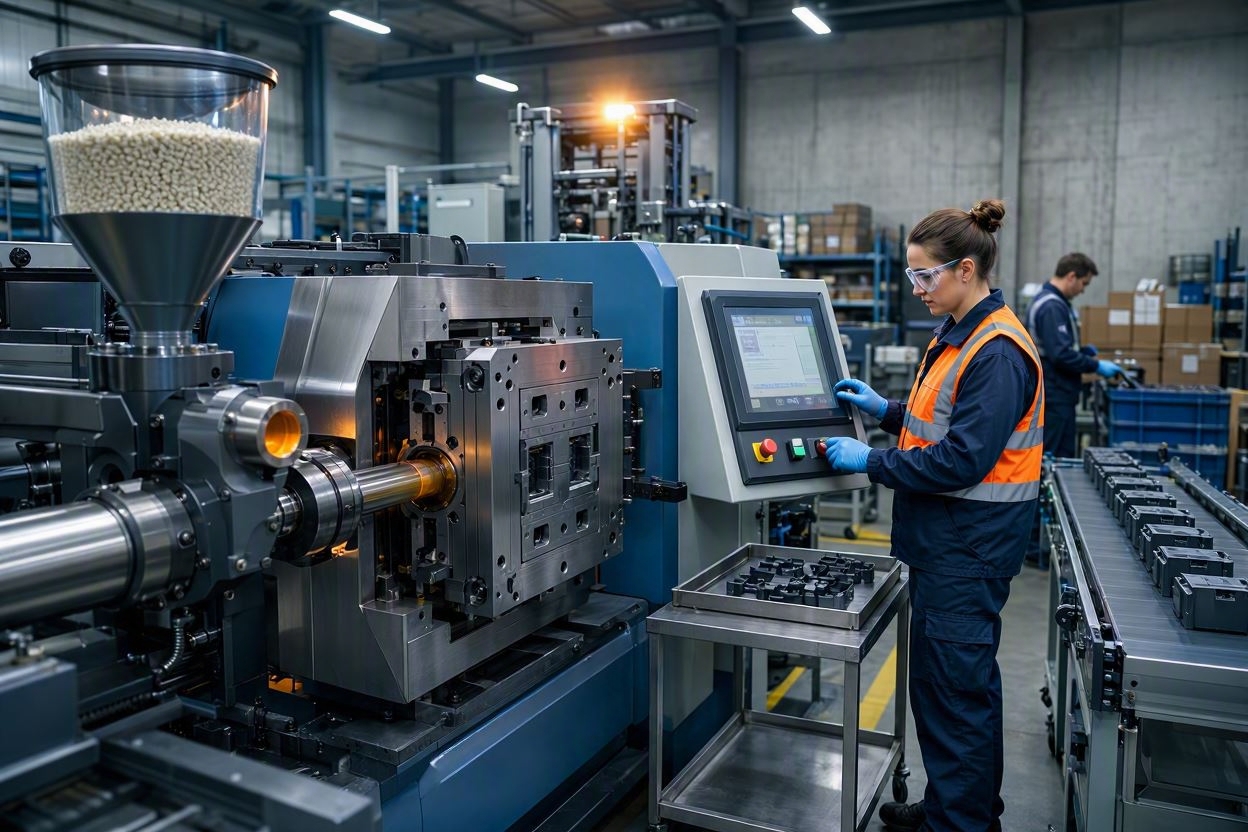
Granules go in. Parts come out. On paper it is that simple, and on paper is exactly where the trouble starts.
Between those two points sits everything that actually decides whether the month was good. The resin you bought is priced off crude and the dollar, so your material cost moved three times while you were quoting a fixed rate. Two lots of the same grade arrived with the same name on the bag and behaved like different materials on the machine. The hopper drew moisture overnight and the morning's first hundred shots came out with splay. A changeover that should have taken forty minutes took two hours because the purge wouldn't clear. None of that is in your accounting software. All of it is in your margin.
You already know this. You have run this plant long enough to feel the difference between a smooth day and an expensive one before any report tells you. The problem was never that you don't understand your business. The problem is that your business happens faster than your records can hold it.
The books tell you last month's story. The floor is living this morning's.
Where the margin actually leaks
Where the money quietly goes.
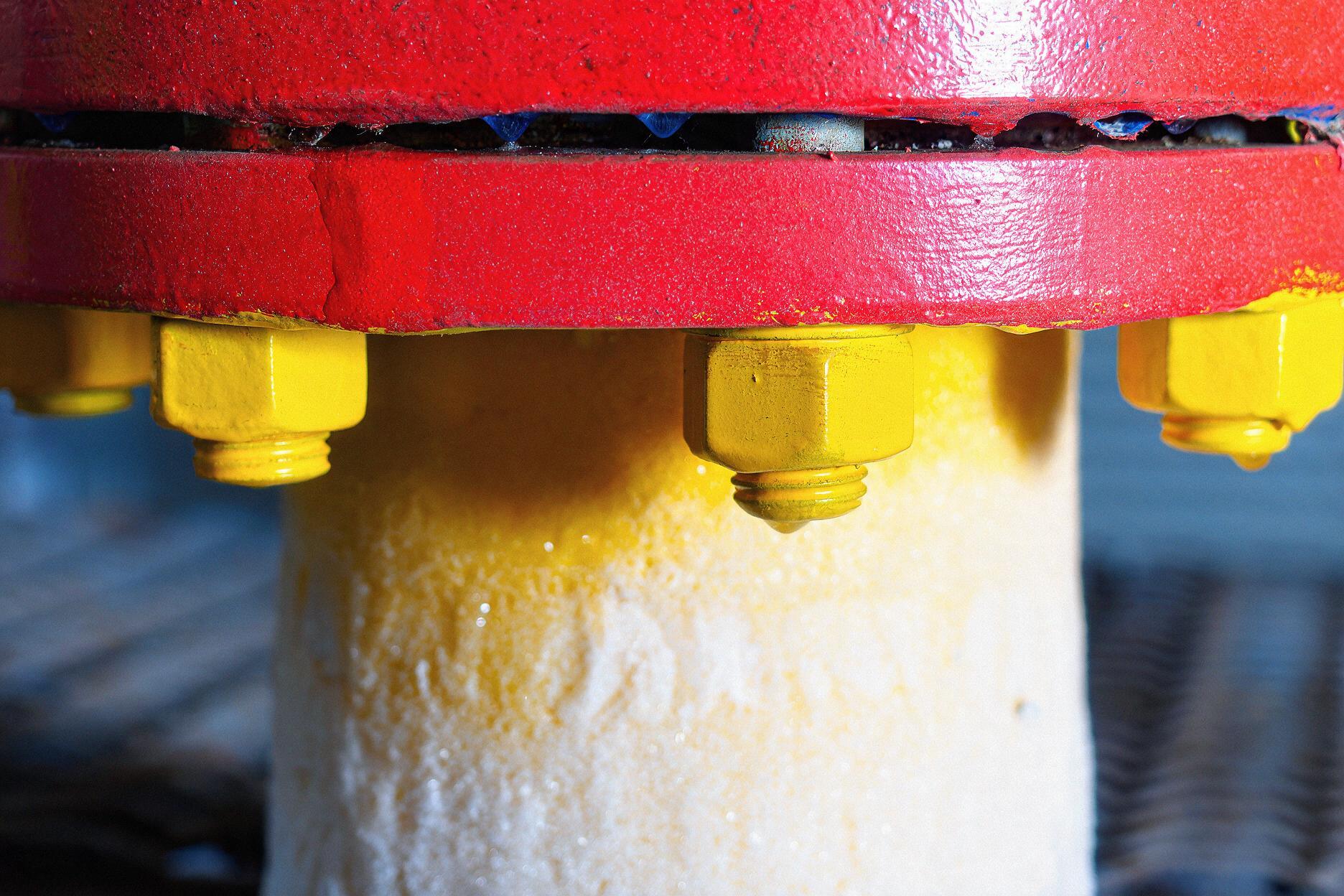
In plastics processing, raw material is not a cost line. It is the business — sixty to seventy paise of every rupee, before a single machine hour is counted. Which means margin in this trade is not lost in the big, visible events. It is lost in the small, unrecorded ones, and it is lost in the same places in almost every plant.

Sprues, runners and rejects waiting on the granulator.
The reconciliation nobody finishes
You issued a certain weight of resin. You produced a certain weight of good parts. Somewhere in the gap is scrap, regrind, purge, sprues, and startup rejects — and in most plants, that gap is estimated, not measured. When issued-versus-consumed-versus-produced is a guess, so is your true material cost, and so is every price you quote off it.
Sprues, runners and rejects waiting on the granulator.
Formula drift
The recipe that leaves the lab and the recipe that runs on the third shift are rarely the same recipe. A little extra masterbatch to fix a shade. A regrind ratio pushed higher than anyone would admit on a costing sheet. Each adjustment is reasonable in the moment. Together, over a month, they are the difference between the margin you planned and the margin you got — and no one can point to where it went, because it was never written down.
The blend at the hopper rarely matches the costing sheet.
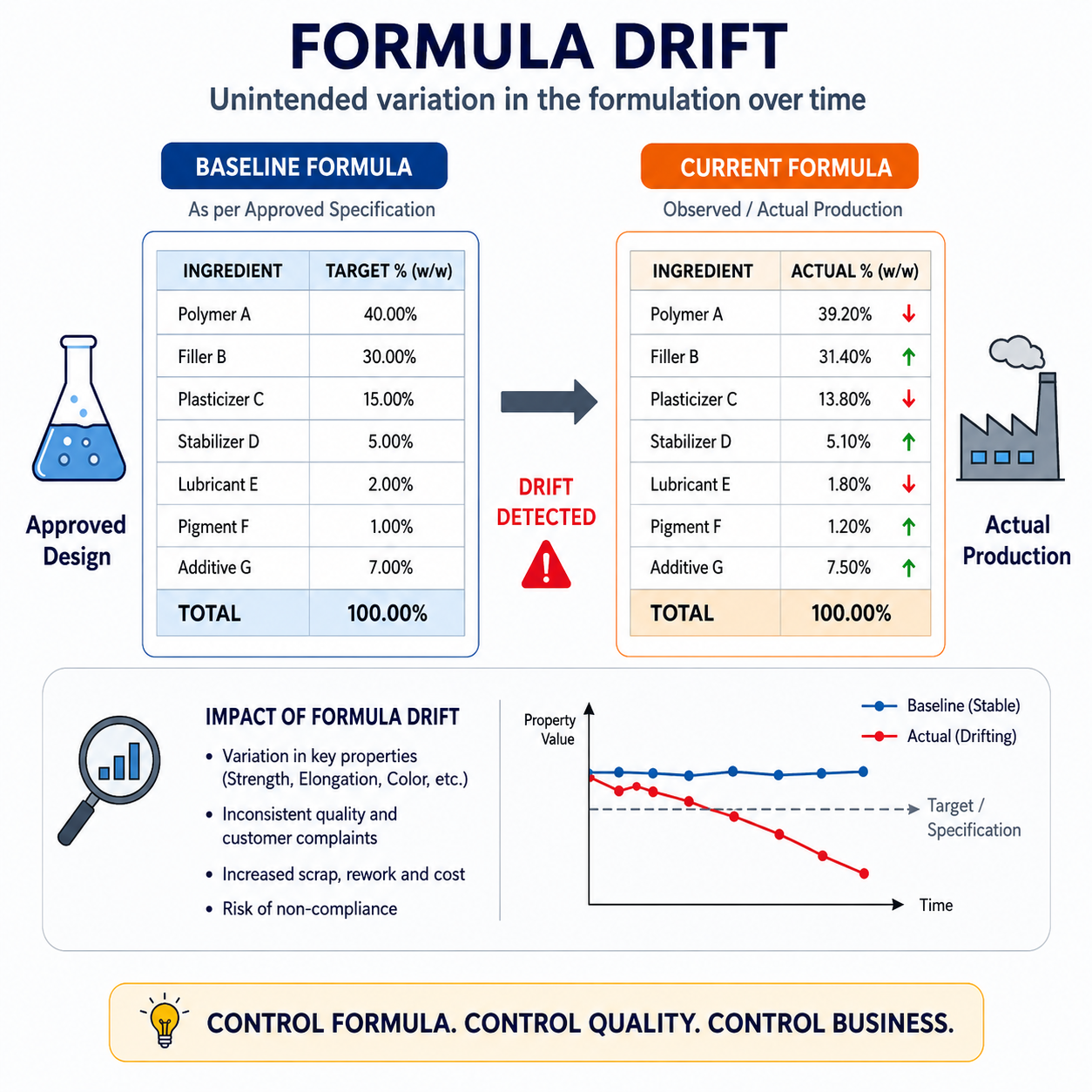
The blend at the hopper rarely matches the costing sheet.
Then there is rejection, which everyone counts wrong. A rejected part is not one loss, it is three: the material you can only partly recover, the machine time you spent making a defect, and the order you now have to make good on a compressed schedule. A "two percent reject rate" that sounds tolerable on a dashboard is, on the floor, a slow bleed across all three.
And there is the moisture problem, which the hygroscopic grades punish without mercy — the nylon, the PET, the PC, the ABS that will splay and reject if the dryer wasn't given its hours. A rushed startup skips the drying, saves twenty minutes, and spends the morning making scrap.
The margin in this business isn't lost in one place you can fix. It's lost in ten places you can't currently see.
The gap between the machine and the ledger
The problem was never effort, or knowledge.
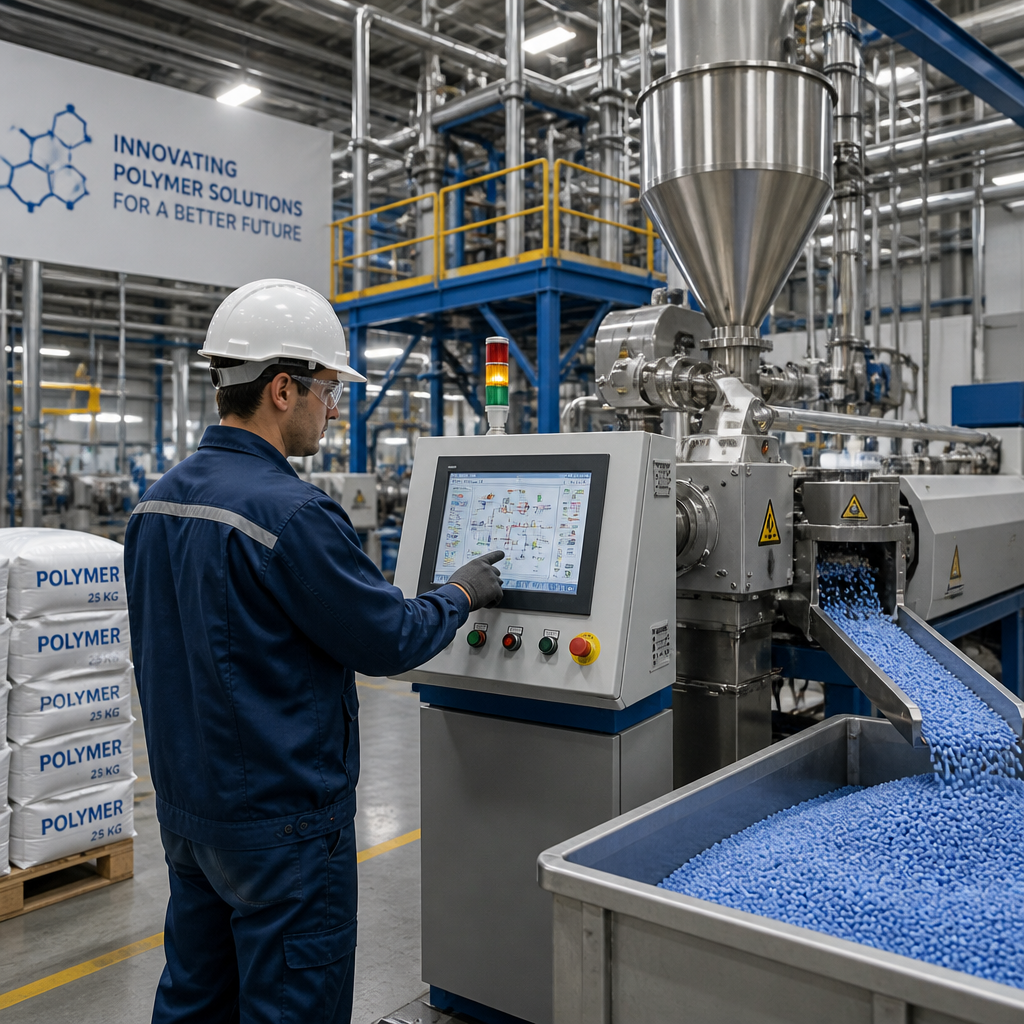
Here is the honest shape of the problem. Everything worth knowing is known — but it is known at the machine, by the operator, in the moment, and there it stays. The supervisor knows which mould has been running hot all week. The senior operator knows that the second batch of the day always needs a touch more cooling. The store-keeper knows, roughly, that the regrind bin is filling faster than it should. None of it is written where the owner can act on it. It lives in a register that gets filled at the end of the shift from memory, in a WhatsApp photo, in a conversation that happened and was forgotten. By the time any of it reaches the accounts, it has become a number with no story attached — a material cost that is higher than expected, a month that was thinner than it felt. The information arrived, but it arrived too late and too flat to change anything. You are managing a fast, physical, minute-by-minute process with a rear-view mirror that updates once a month.
The knowledge is already in your plant. It just never reaches the person who can act on it, in time to matter.
What a well-run polymer plant looks like
The habits, not the hardware.
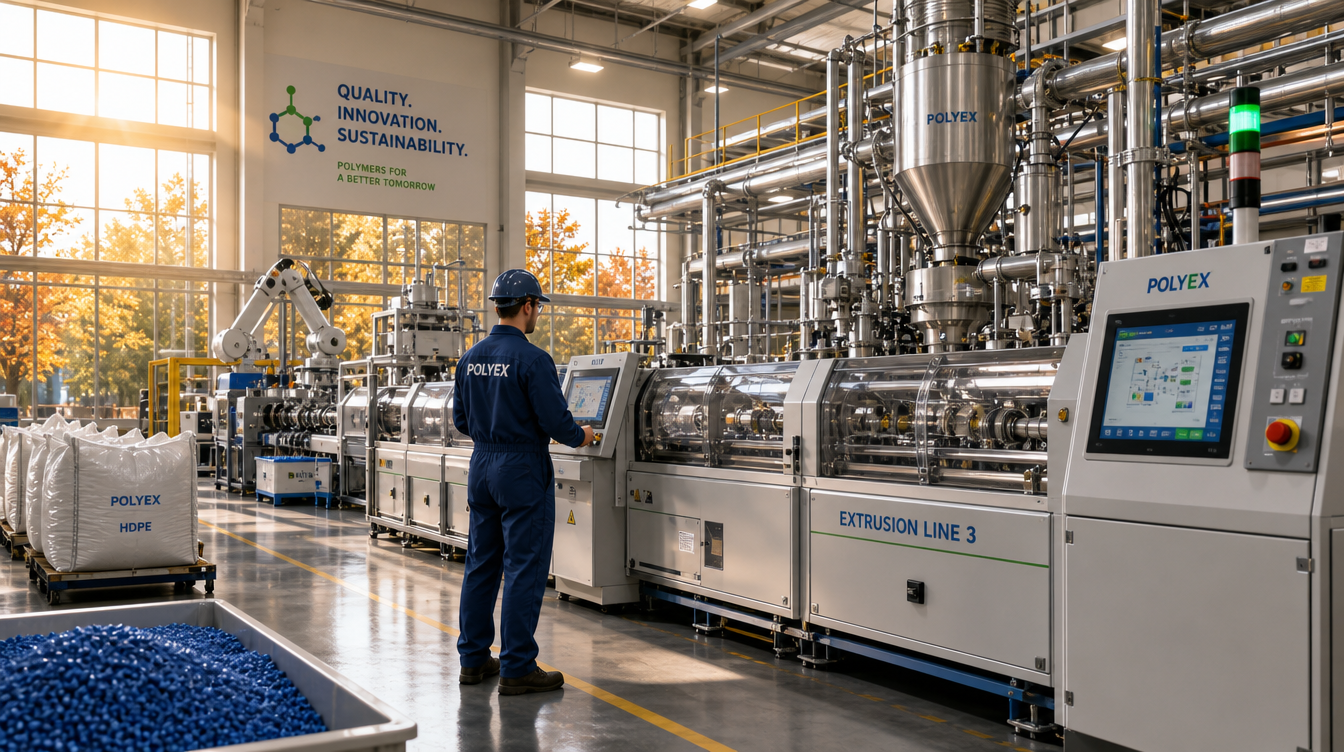
The best plants in this trade are not the ones with the newest machines. They are the ones where the floor and the office are looking at the same reality at the same time. That maturity looks like a handful of specific habits.
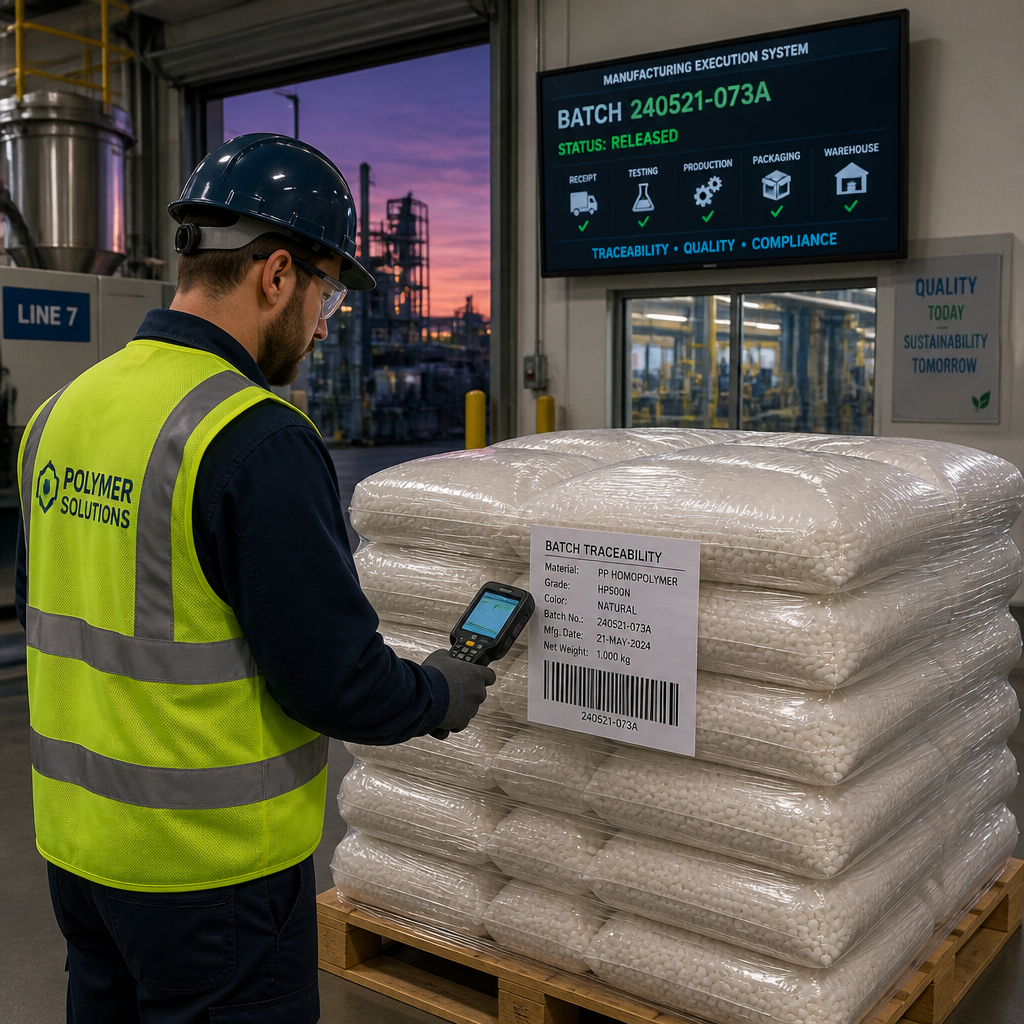
A batch traveller that survives the shift.
Every batch has a lineage
A good part can be traced back to the exact formula it ran on and the exact raw material lot it came from. When a customer complains, or a shade drifts, the answer takes minutes, not a morning of asking around. Traceability is not a compliance chore here — it is how you defend your margin and your name at the same time.
A batch traveller that survives the shift.
Stock that tells the truth
The material balance reflects what is on the floor right now — resin, masterbatch, regrind, finished goods — not what the system thought was there last Tuesday. Consumption is booked against production as it happens, so the reconciliation that used to be a month-end argument becomes a number you can trust on any given afternoon.
A store that matches the system.
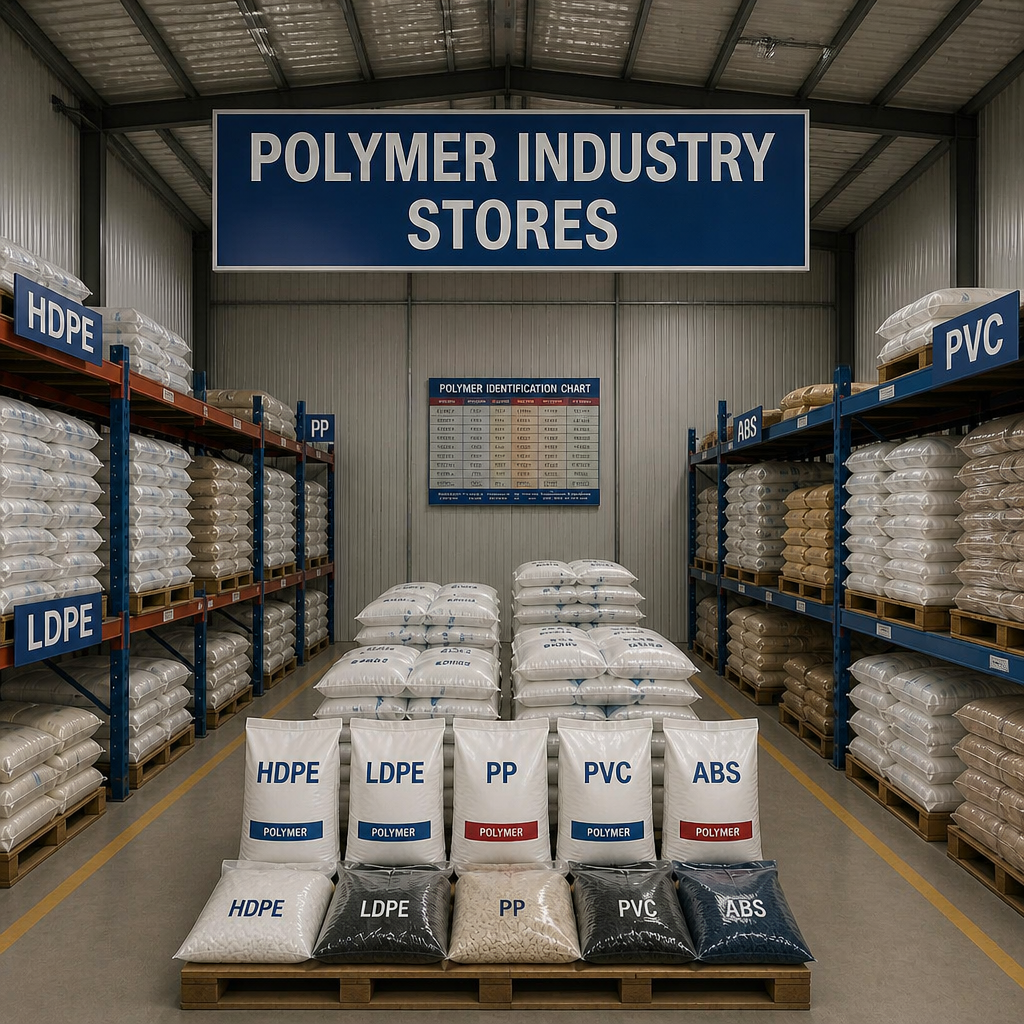
A store that matches the system.
And above all, the well-run plant is managed by exception. The owner does not read every entry. The owner is shown the three things that went wrong today — the batch that overran on material, the mould running hot, the reject rate that spiked on line two — on the day they happen, while there is still time to act. Everything normal stays quiet. Only the exceptions come forward. That is the difference between running a plant and being run by it.
Maturity in this business isn't more reports. It's fewer surprises.
The instrument
The tool for everything described so far.
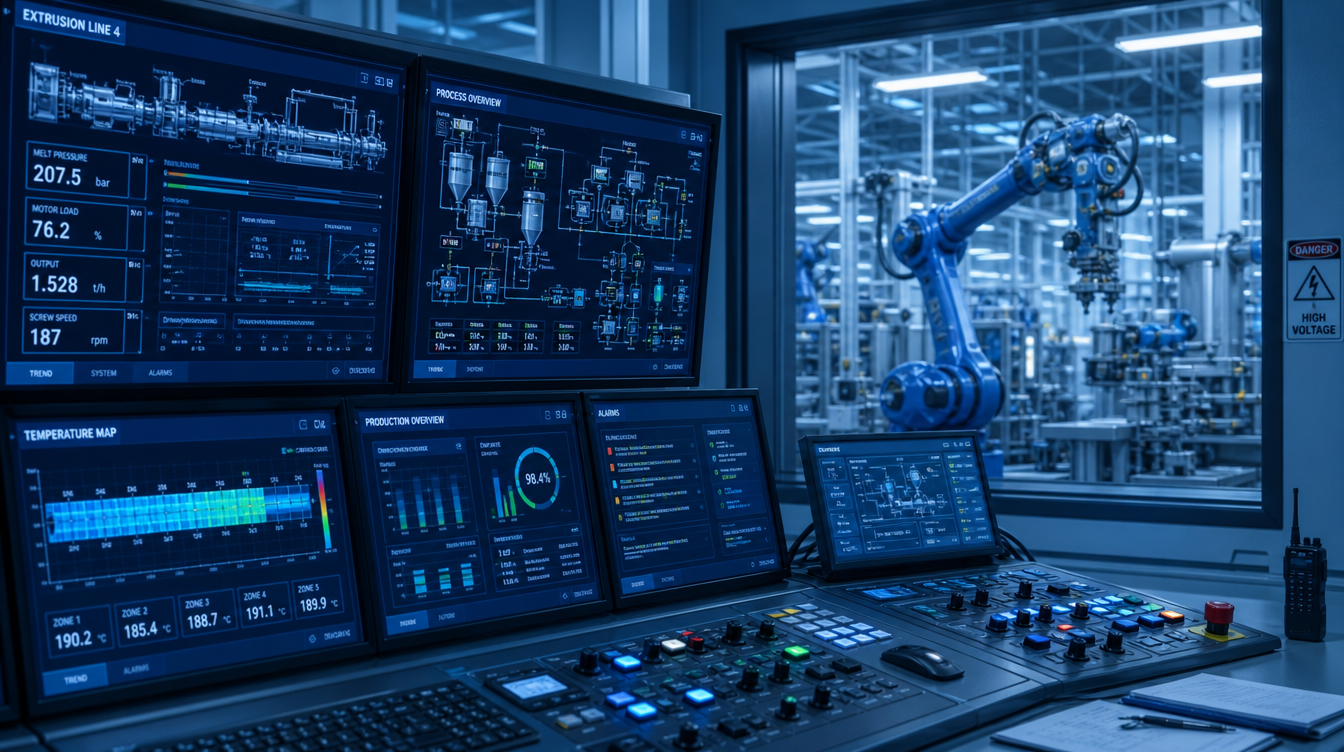
We built Poly ERP because those habits are hard to hold onto with registers and memory, and because the general-purpose software most plants inherit was never designed for how polymer processing actually works. It does not understand a shot weight, a regrind ratio, a formula, a purge loss, a moisture-sensitive grade. So the floor works around it, and the gap we described never closes.
Poly ERP starts from the machine, not the ledger. One production entry per process — moulding, extrusion, blow moulding, compounding, whatever you run — capturing what actually happened at that machine, in terms the operator already thinks in. That single honest entry is what everything else is built on.
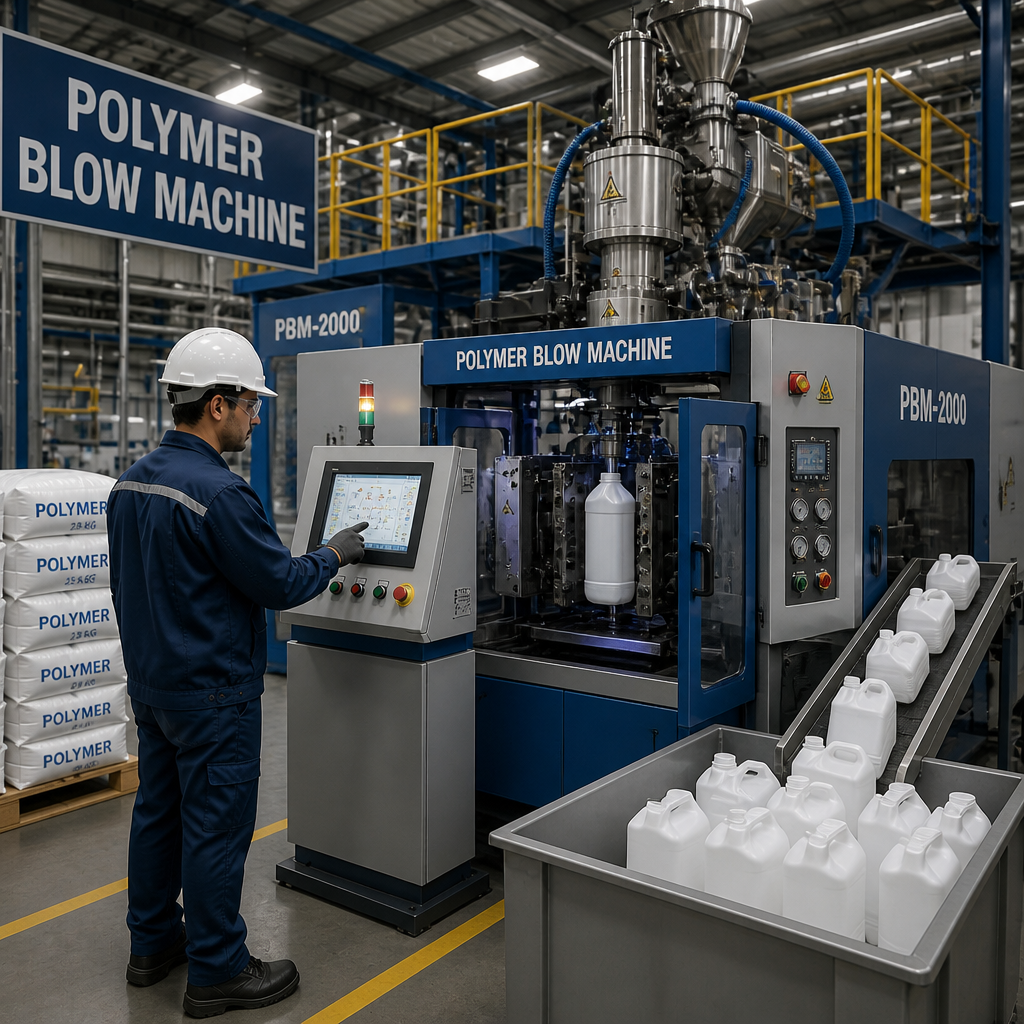
One entry at the machine feeds everything downstream.
From entry to answer
Because consumption is booked against real production, the material reconciliation you used to estimate becomes a number the system keeps for you — issued, consumed, produced, scrap, regrind, all reconciled. Formula and BOM control means the recipe on the floor is the recipe you costed, and any drift is visible instead of buried. Stock is live. And the exceptions — the material overrun, the reject spike, the batch that broke pattern — come to you the day they happen, through an exception feed built for an owner who has better things to do than read every row.
One entry at the machine feeds everything downstream.
Reports you can put on the table
The numbers a polymer manufacturer actually needs — material consumption, production and rejection, stock balance, formula-wise costing — viewable on screen and printable when you need them in your hand, in front of a customer or a banker. Not dashboards for their own sake. The reports that end an argument.
Printable when the moment calls for paper.
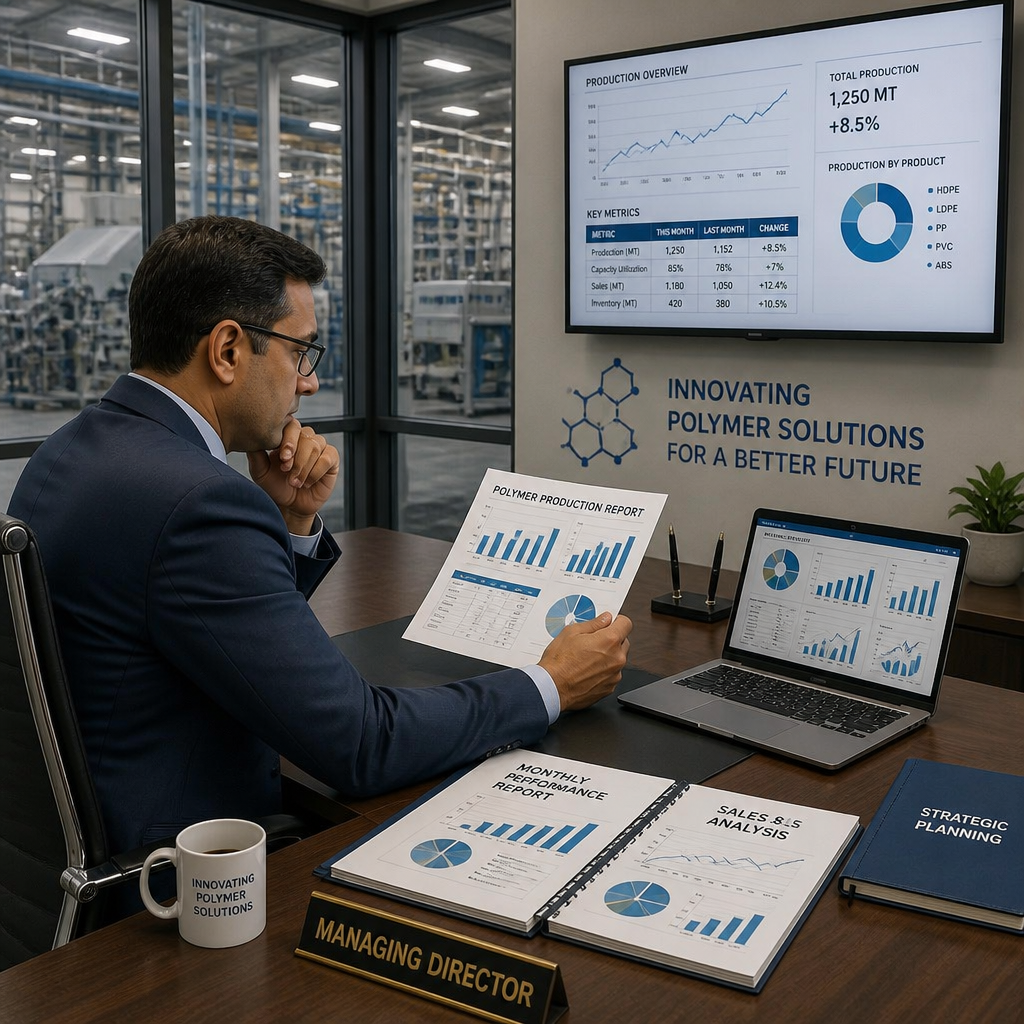
Printable when the moment calls for paper.
And it speaks your plant's language. Poly ERP is being built for manufacturers in Andhra Pradesh, Telangana and Maharashtra — with the interface and the onboarding meeting your team where they are, in Telugu and Hindi where that helps the floor adopt it rather than resist it. Software that the shift operator won't use is software that changes nothing. This is built to be used by the people who actually hold the knowledge.
How Fervour works
Process before Technology.
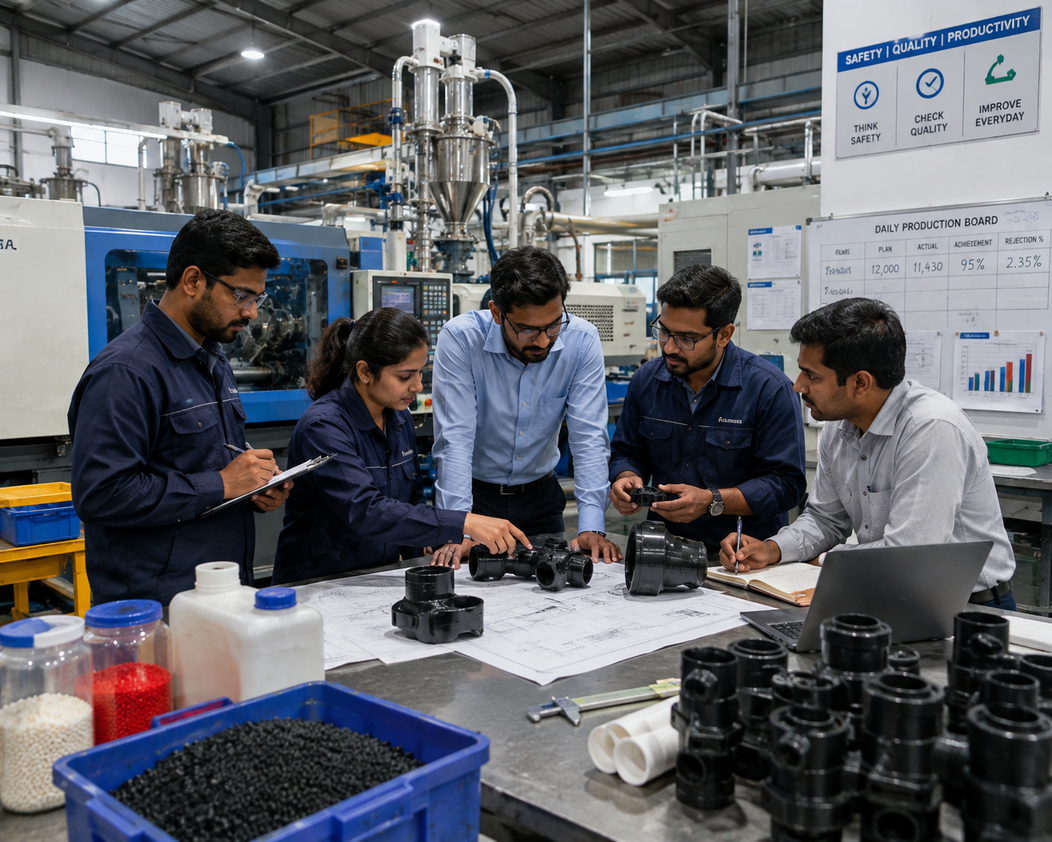
We are not a software company that discovered manufacturing. We build for the way your plant already works, and then we make that way faster, tighter and visible — rather than asking your floor to bend around a system built for someone else's business. Most software fails in this trade because it arrives first — a system is bought, and the plant is told to fit itself around it. We work in the opposite order. First we understand your process: how material actually moves, where the margin actually leaks, what your floor already knows. Only then does technology come in, shaped around what we found — because a system that doesn't match how you work is a system your floor won't use, and software the floor won't use changes nothing.
We build for how you actually work — not how the software wishes you did.
If any of the plant we just described sounds like yours — the reconciliation that never quite closes, the knowledge that never leaves the floor, the month that was thinner than it felt — that is exactly the plant Poly ERP was built for. The next step is not a purchase. It is a conversation, and a short walk-through on your own numbers. Fervour Technologies Private Limited · Process before Technology To see Poly ERP against your own plant's numbers, write to info@fervourtech.com.
Fervour Technologies Private Limited
To see Poly ERP against your own plant's numbers, write to info@fervourtech.com.